


ASSET CLASS
Retail Mall

LOCATION
Mumbai, India

SIZE
508,000 sq ft

CAAS MODEL
Kaer Water
Ultra low-carbon cooling for high performance retail
Inorbit Mall Vashi operates a centralised chilled water plant comprising an 800 RT Trane chiller installed in 2008, alongside five 350 RT Clivet chillers installed in 2005, supported by multiple cooling towers, condenser water systems and associated pumping infrastructure. The plant was originally designed to meet the mall’s base cooling requirements at the time of commissioning and has remained a critical component of the asset’s day‑to‑day operations.
However, with several key pieces of equipment approaching two decades of service, the cooling plant began to face increasing operational challenges. These included declining energy efficiency, rising maintenance and lifecycle costs, and a growing risk to cooling reliability during peak operating periods. The age and condition of the plant also limited the mall’s ability to optimise performance in response to evolving load profiles and modern efficiency standards.
At the same time, Inorbit Mall Vashi sought to improve overall energy performance and align the asset more closely with its long‑term sustainability and ESG objectives. This combination of ageing infrastructure, operational risk and sustainability ambitions highlighted the need for a modernised, higher‑efficiency cooling solution capable of delivering reliable performance while reducing energy intensity and supporting the mall’s long‑term resilience.
Challenges
-
Rising repair and maintenance costs
-
Peak demand reliability risk
-
Aging cooling system
-
Large carbon footprint
Solutions
-
Upgraded the existing chiller plant under Kaer’s Cooling as a Service (CaaS) model with no upfront capital investment and zero downtime
-
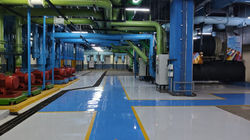
Retrofitted the plant with two 700 RT high-efficiency chillers
-
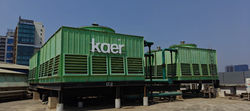
Installed three 800 RT cooling towers to support the upgraded system
-
Optimised the system to better match actual cooling demand, and improve efficiency, reliability and long-term system resilience
 |  |  |
|---|
Impact
50%
Improvement in
cooling efficiency
(kW/RT)
2.7M
Annual energy reduction
(kwH)
>2M
Annual carbon reduction (kgCO₂)